
Enzymatic siRNA Synthesis
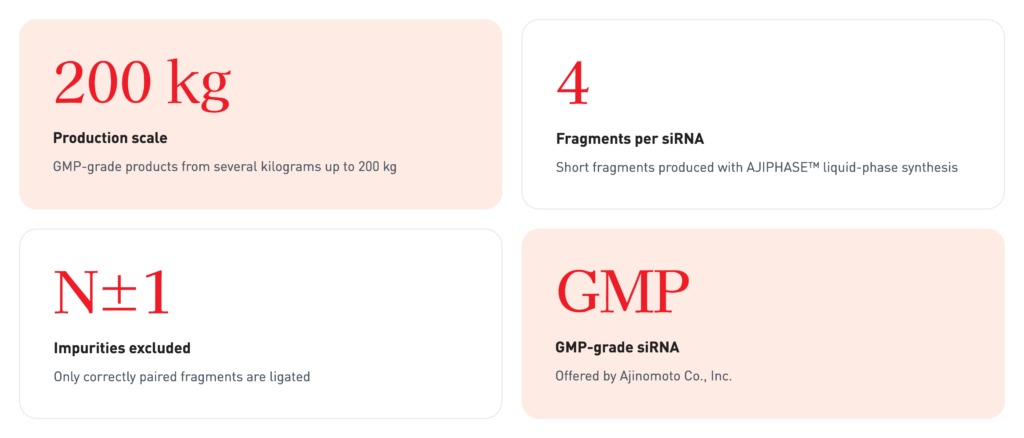
Our technology utilizes enzyme-mediated ligation of multiple RNA fragments to produce target siRNA compounds with higher yield and purity compared to conventional solid-phase synthesis. This method enables the production of GMP-grade products in quantities ranging from several kilograms up to 200 kg.
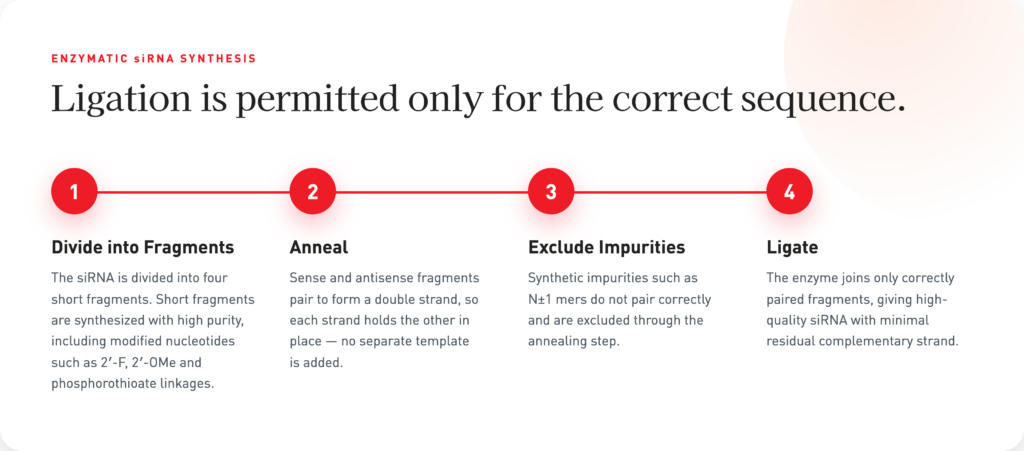
How Enzymatic siRNA Synthesis Works
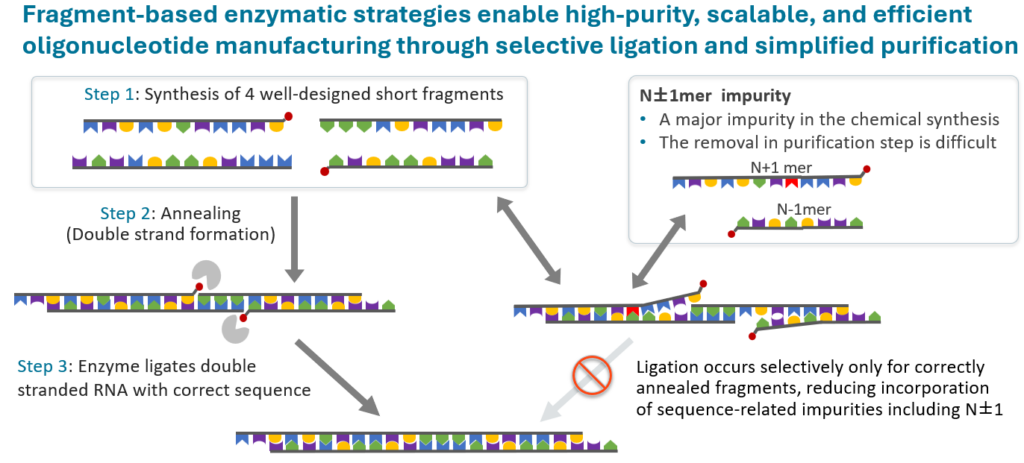
The siRNA is divided into four short fragments produced with AJIPHASE™, our liquid-phase synthesis technology. The fragments anneal to form a double strand, and the enzyme joins only correctly paired fragments — so synthetic impurities such as N±1 mers are excluded, and the purification step for the synthetic fragments can be omitted.
Patent: WO2020171092 — Method for Producing Modified Oligonucleotide Including Complementary Sequence
Production Overview
GMP-grade siRNA from several kilograms up to 200 kg. This service is offered by Ajinomoto Co., Inc.
Advantages of Enzymatic siRNA Synthesis
High Purity
The short length of the synthesized fragments allows for high purity production. In the enzyme ligation process, impurities (such as N±1 mer) can be effectively removed, and minimal residual complementary strand remains after ligation.
High Productivity
High-quality intermediates enhance purification efficiency compared to general production methods, with high reproducibility and productivity even in large-scale production.
Reduced Environmental Impact
High productivity reduces the amount of raw materials used, lowering the environmental impact throughout the oligonucleotide production supply chain.

Let’s discuss enzymatic siRNA synthesis for your program
GMP-grade siRNA, from several kilograms up to 200 kg.