
Continuous Flow. Commercially Proven.
For more than 15 years, customers have trusted ABPS to tackle manufacturing challenges that others may consider too hazardous, too complex or too difficult to scale. By combining continuous flow expertise with process safety, engineering and automation capabilities, we transform challenging chemistry into safer, more robust and more sustainable manufacturing routes — from development through cGMP commercial production.
Bringing Challenging Chemistry Safely to Scale
What sets ABPS apart is not simply our flow equipment, but the organization built around it. Continuous flow requires deep integration of chemistry, process safety, engineering, automation, quality and operations.
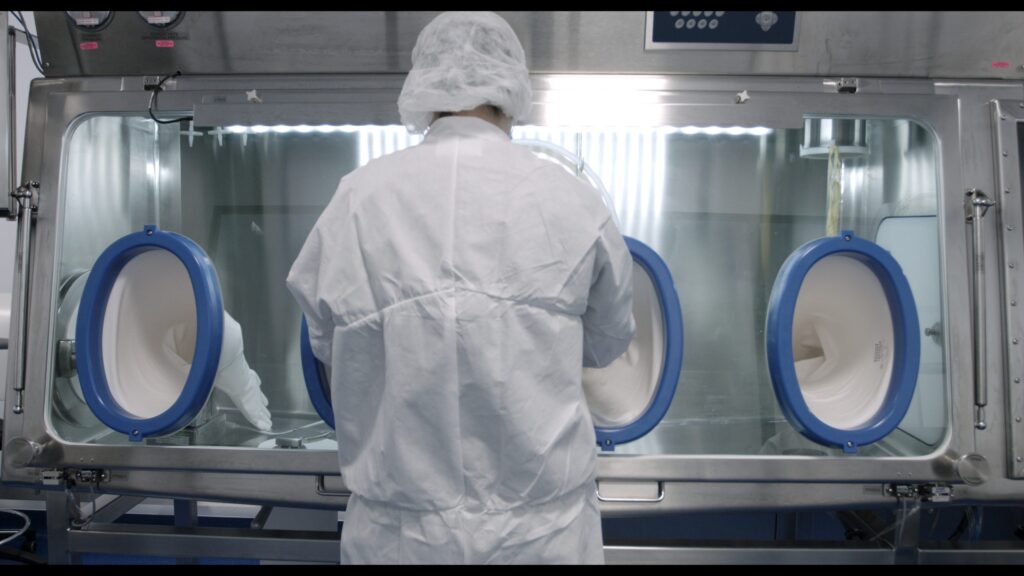
Built for Hazardous Chemistry
Built on decades of hazardous chemistry expertise, ABPS uses continuous flow to safely industrialize transformations that many consider too hazardous for conventional manufacturing. Supported by advanced process safety studies covering both liquid and gas phases, extensive monitoring capabilities and in-house engineering, we enable safer execution of nitrations, azides, diazomethane, hydrogenations and other high-risk chemistries.
Precision, Reliability, Quality
ABPS has built a complete continuous flow ecosystem around process reliability. Combining precise process control, real-time PAT, proprietary engineering and experienced operators, we consistently deliver robust, scalable manufacturing processes with superior product quality and reproducibility — whether developing new flow routes or converting existing batch processes.
Chemistry-Driven Sustainability
At ABPS, sustainability is driven by chemistry, not claims. By combining continuous flow, atom-efficient process design and process intensification, we help customers reduce waste, solvent consumption and energy demand. Our proprietary EcoPass tool quantifies improvement opportunities, while 100% renewable electricity further reduces our environmental footprint.
From Grams to Tons
Flow chemistry only creates value when it reaches commercial reality. From grams to tons, ABPS combines proprietary flow technologies, in-house engineering and process redevelopment expertise to accelerate scale-up and industrialization. Our flexible modular approach helps to implement tailored flow solutions while building robust and economically competitive manufacturing routes.
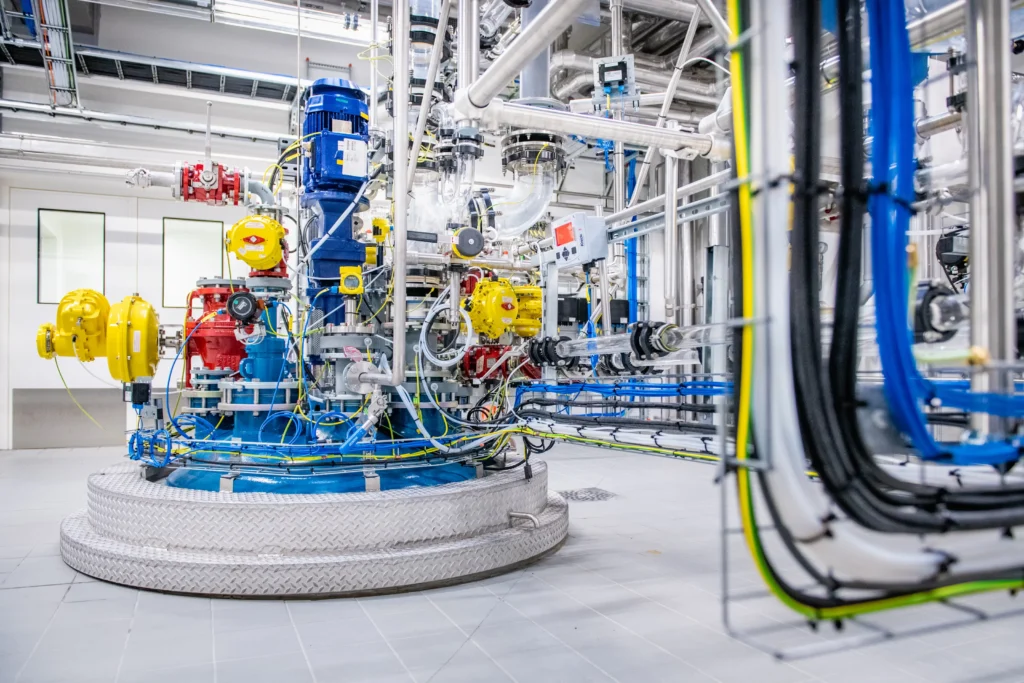
One Flow Platform. Multiple Technologies. Endless Possibilities.
ABPS has built a comprehensive continuous flow platform designed to transform laboratory innovation into robust industrial manufacturing. Rather than starting from a preferred reactor technology, we start from the chemistry, selecting the optimal process architecture for each specific reaction, unit operation and business objective. This technology-agnostic approach ensures customers benefit from the most effective solution rather than forcing chemistry into a predefined equipment platform.
Our current flow platform technologies include specialized expertise in hydrogenation, photochemistry, cryogenic chemistry and continuous processing using CSTR-based architectures. Beyond reaction engineering, we continuously expand flow-enabled downstream capabilities such as continuous crystallization, isolation and drying, enabling increasingly integrated manufacturing solutions.
15+
years continuous flow experience at commercial scale
cGMP
Commercial flow manufacturing — Belgium
PAT
Real-time process analytical technology integration
EcoPass
Proprietary sustainability quantification tool
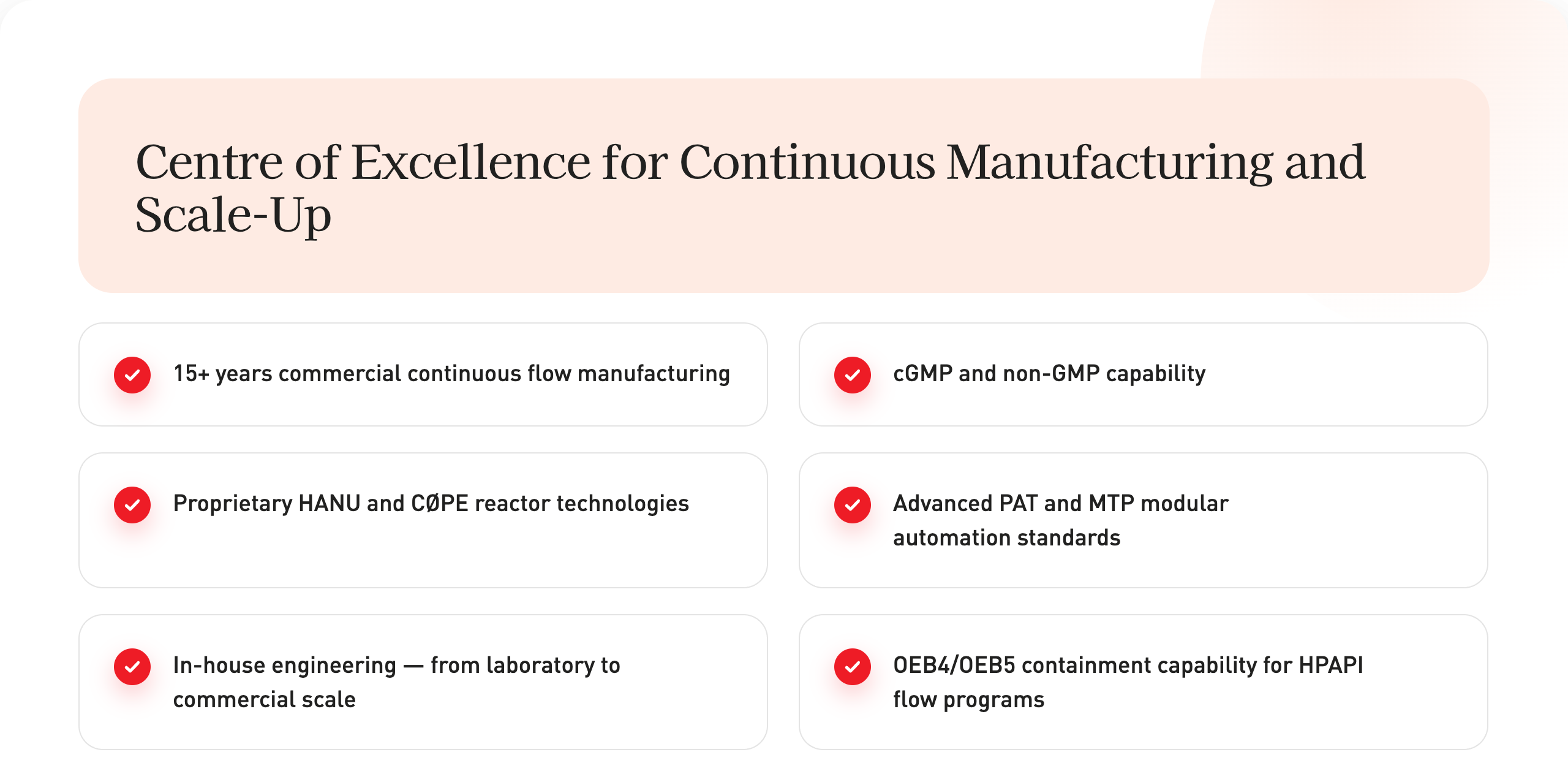
Continuous Flow in Belgium — Centre of Excellence
ABPS’s Belgian facility in Wetteren is the home of our Centre of Excellence for Continuous Manufacturing and Scale-Up. This is where our continuous flow platform was built, refined and proven over 15+ years of commercial operation — across cGMP and non-GMP environments, from development through multi-ton commercial supply.
Belgium is where new flow routes are designed, hazardous chemistry is safely industrialized, and proprietary HANU and CØPE technologies are developed and deployed. The combination of in-house engineering, advanced PAT and MTP-based modular automation creates a uniquely capable environment for translating laboratory innovation into robust, commercially viable manufacturing processes.

Continuous Flow in India — Network Flexibility for Commercial Supply
ABPS positions India as part of the broader small molecule manufacturing network, with cGMP commercial capacity and R&D support connected to the Belgian development and technology teams. For flow programs, the key message is network flexibility, technology-transfer discipline and the ability to assess the best supply strategy across Belgium and Vizag. Where a process is developed or intensified in Belgium, ABPS can evaluate whether later lifecycle or back-integration steps are suitable for transfer within the network. This approach supports the customer promise of quality, cost competitiveness and supply-chain resilience across the ABPS small molecule network.

Cost-competitive Commercial sSupply
Lower-cost manufacturing for mature products without supply-chain disruption

Technology Transfer Discipline
Same project management, process knowledge and quality standards as Belgium

Supply-Chain Resilience
Multi-site manufacturing options assessed per program lifecycle stage

Bring us your process challenge. We’ll figure it out.
Whether the challenge is hazardous chemistry, scale-up complexity, sustainability targets or cost competitiveness — our experts assess, advise and execute.
Frequently Asked Question
What types of reactions are suited for continuous flow chemistry?
Continuous flow delivers the greatest value where conventional batch processing reaches its limits. ABPS applies flow to hazardous, highly exothermic, energetic and reactive chemistries—including nitrations, azide/HN3 chemistry, diazomethane generation, hydrogenations, photochemistry, Grignard and high-temperature/high-pressure reactions. Flow is also highly effective for sustainability-driven process redesign, enabling more concentrated operation, lower solvent consumption, reduced energy demand and significantly improved process efficiency, often while simultaneously improving safety, quality and scalability.
What are the advantages of continuous flow over batch manufacturing?
Continuous flow can simultaneously improve safety, quality, sustainability and economics. By reducing reactive inventory and providing tighter control of mixing, temperature and residence time, it enables safer and more robust manufacturing. Higher concentrations, lower solvent consumption and integrated processing can significantly reduce waste, energy demand and operating costs. Continuous flow can also lower CAPEX requirements, be integrated with existing batch assets and support automated, PAT-driven manufacturing strategies that increase processing reliability while improving long-term process competitiveness.
Can continuous flow processes be used at commercial scale?
Absolutely. Commercialization is where ABPS has been creating value with continuous flow for more than 15 years. We guide customers from laboratory proof-of-concept through pilot campaigns to full-scale industrial implementation, across both cGMP and non-GMP environments. From API manufacturing to multi-ton production, our combination of process development, engineering and scale-up expertise enables flow processes to be translated into safe, robust and economically competitive commercial operations.
Does ABPS have experience with continuous flow for hazardous chemistry?
Yes. ABPS has built its reputation on safely industrializing challenging chemistry. For more than 15 years, we have applied continuous flow to hazardous transformations including nitration, azide/HN3 chemistry, diazomethane generation, cyclopropanation and hydrogenation. Supported by advanced process safety studies, real-time PAT monitoring and in-house engineering, we transform high-risk reactions into safer, more robust and scalable manufacturing routes from development through commercial production.
Why are sustainability and cost efficiency two sides of the same coin?
At ABPS, sustainability is the result of smarter process design. Continuous flow enables more selective chemistry, lower solvent consumption, higher concentrations and fewer process deviations—reducing waste, energy demand and manufacturing costs simultaneously. Alternative activation methods such as photochemistry can unlock shorter synthetic routes, further improving efficiency. Supported by EcoPass and our integrated approach to chemistry, engineering and scale-up, we help customers achieve a simple objective: processes that are both more sustainable and more economically competitive