
Custom synthesis products
Review our exclusive lineup of production molecules tailored to your exact specifications. Your programs deserve the most advanced nucleic acid materials on the planet. We have the ability to unlock your therapeutic vision a reality – with our product offerings for pharmaceutical, diagnostic and research needs.

DNA Oligonucleotides
Our custom DNA and RNA Oligos are available to customers worldwide. We manufacture custom DNA and RNA oligos with high purity and sequence accuracy to meet our customers’ needs.
Product Details
- High-quality oligonucleotide DNA
— Manufactured under controlled conditions with quality management from synthesis through delivery - Scalable manufacturing
— Supports oligonucleotide production from 15 μg for research applications to gram- and kilogram-scale manufacturing for preclinical and GMP applications - Multiple purification options
— Offers RP-Cartridge or HPLC purification to meet application-specific requirements - Custom length and design
— Supports custom base lengths and sequence designs according to customer requirements - Versatile chemical modification
— Supports fluorescent labels, terminal modifications, and other customized modifications - In Vivo-grade and large-scale synthesis
— Supports in vivo applications and larger-scale production requirements
Overview
We manufacture high-quality oligonucleotide DNA according to customers’ requirements under controlled manufacturing conditions. Our quality management system supports consistent quality from synthesis through delivery, providing reliable products for a wide range of research applications.
We offer flexible synthesis scales, purification options, custom sequence lengths, and a wide range of chemical modifications to meet different research and development needs.
Our DNA Capabilities
Grade & Quality Specifications
We offer multiple quality grades to meet different research requirements, with specifications defined according to oligonucleotide length.
| Grade | Purity | Identification (MS) | Na Form | Endotoxin |
| RP-Cartridge | — | — | — | |
| HPLC | ≤ 99 mer: 90% ≥ 100 mer: 80% | Theoretical MW ≤ 99 mer: ± 2 Da ≥ 100 mer: ± 3 Da | — | — |
| HPLC Plus | ≤ 99 mer: 90% ≥ 100 mer: 80% | Theoretical MW ≤ 99 mer: ± 2 Da ≥ 100 mer: ± 3 Da | Yes | — |
| In Vivo EXP | ≤ 99 mer: 90% ≥ 100 mer: 80% | Theoretical MW ≤ 99 mer: ± 2 Da ≥ 100 mer: ± 3 Da | Yes | ≤ 0.5 EU/mg |
Specifications may vary depending on oligonucleotide length, sequence, and chemical modifications.
Chemical Modification
We support a wide range of chemical modifications for functional and application-specific oligonucleotides.
- Fluorescent modifications
- Terminal modifications
- Other customized modifications
- Alexa Fluor® fluorescent dye series: 488, 647, and 750 nm
- Other fluorescent wavelengths available upon request
In Vivo-Grade Synthesis
In vivo-grade oligonucleotide DNA is available for experimental applications requiring additional quality specifications.
For larger-scale manufacturing and CDMO services, please see our CDMO Services page.
Pricing
The price is determined by synthesis scale base length, and purification method. For products shipped outside of Japan, pricing and delivery times will vary.

RNA Oligonucleotides
Our custom DNA and RNA Oligos are available to customers worldwide. We manufacture high quality, custom RNA oligos to meet our customers’ needs.
Product Details
- Modified base
- Large scale synthesis
- Multiple numbers
- Long chain oligos
- in vivo grade and GMP synthesis
Our RNA Capabilities
We offer multiple quality grades to meet different research requirements, with specifications defined according to oligonucleotide length.
| Grade | Purity | Identification (MS) | Na Form | Endotoxin |
| RP-Cartridge | — | — | — | |
| HPLC | ≤ 99 mer: 90% ≥ 100 mer: 80% | Theoretical MW ≤ 99 mer: ± 2 Da ≥ 100 mer: ± 3 Da | — | — |
| HPLC Plus | ≤ 99 mer: 90% ≥ 100 mer: 80% | Theoretical MW ≤ 99 mer: ± 2 Da ≥ 100 mer: ± 3 Da | Yes | — |
| In Vivo EXP | ≤ 99 mer: 90% ≥ 100 mer: 80% | Theoretical MW ≤ 99 mer: ± 2 Da ≥ 100 mer: ± 3 Da | Yes | ≤ 0.5 EU/mg |
Specifications may vary depending on oligonucleotide length, sequence, and chemical modifications.
In Vivo-Grade Synthesis
Grade & Quality Specifications
In vivo-grade oligonucleotide DNA is available for experimental applications requiring additional quality specifications.
For larger-scale manufacturing and CDMO services, please see our CDMO Services page.
RNA Chain Length
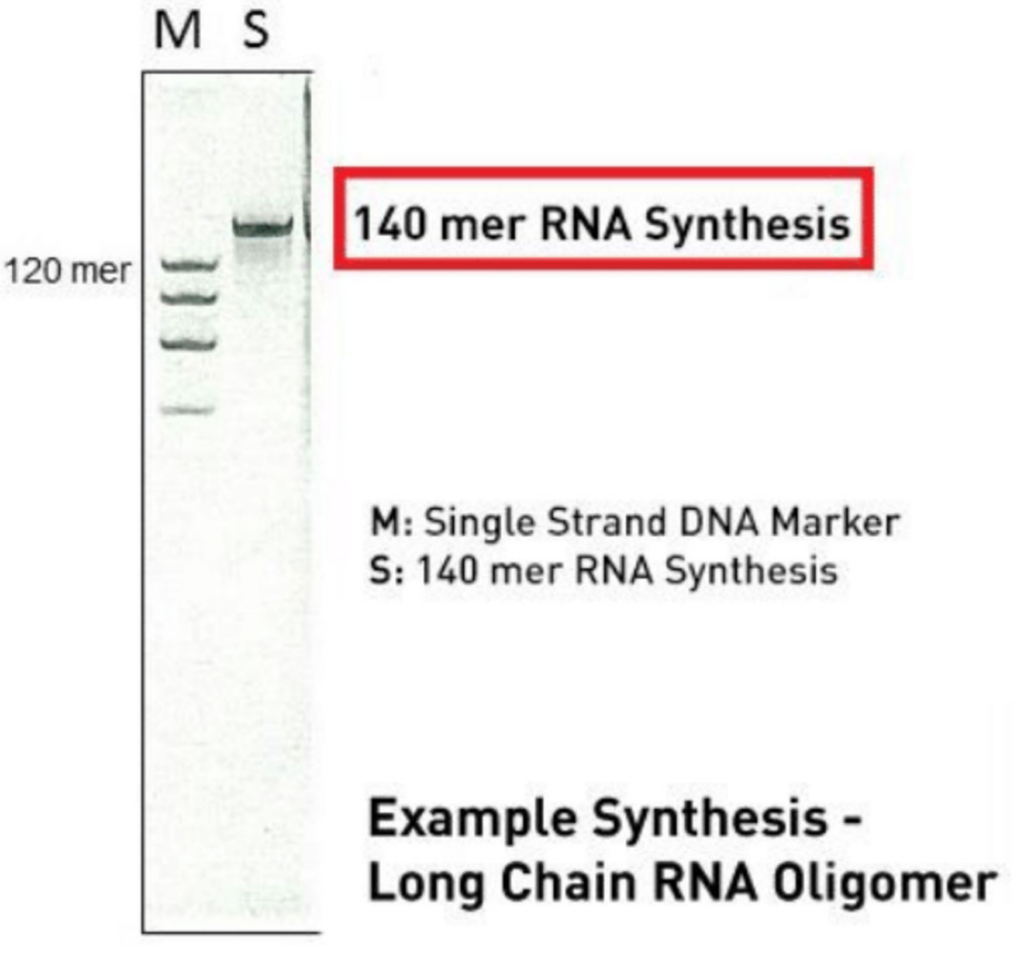
Our standard solid-phase synthesis process supports RNA synthesis from 11 to 120 bases. However, depending on the sequence, synthesis by the standard solid-phase method may be challenging. In such cases, we offer GenClip™, which combines solid-phase synthesis with enzymatic ligation to enable the synthesis of longer RNA molecules of up to approximately 600 bases.
Based on your target sequence, our experts will evaluate the optimal synthesis approach and recommend the most suitable method for your needs.
Custom Modification Service
We support a wide range of chemical modifications for functional and application-specific oligonucleotides.
- Fluorescent modifications
- Terminal modifications
- Other customized modifications
- Alexa Fluor® fluorescent dye series: 488, 647, and 750 nm
- Other fluorescent wavelengths available upon request
Pricing
The price is determined by synthesis scale base length, and purification method. For products shipped outside of Japan, pricing and delivery times will vary.


Long Chain RNA
Long chain RNA is available to customers worldwide.
This product is a reagent for research. It cannot be used for clinical purposes.
Product Details
Overview
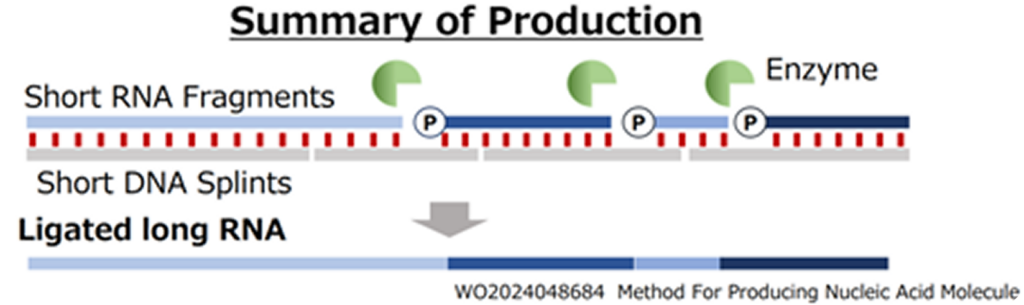
We have developed a new technology, GenClip™, which enables to synthesize long RNA (100-600 mer) with high yield and high quality. This technology is also usable for the synthesis of sgRNA, pre-miRNA, and mRNA. Due to its high quality, long RNA produced using this technology can also be used as analytical standards.
Main Features of the Techology
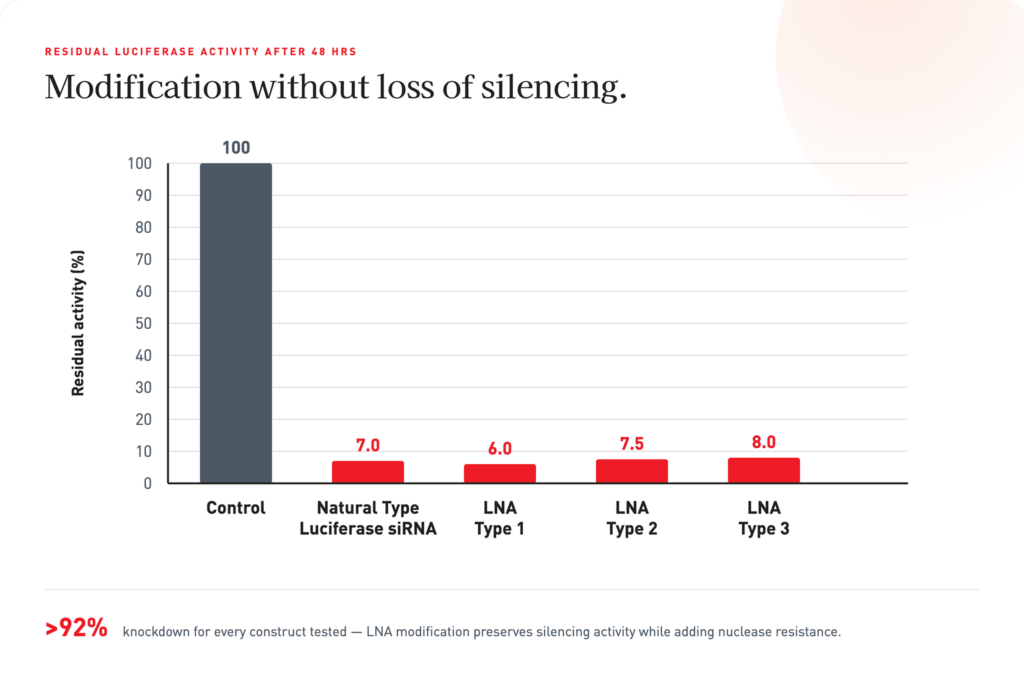
- This technology is applicable for various chemical modification such as 2’-F, 2’-MOE, LNA etc.
- The combination of solid phase synthesis and enzymatic ligation enables high yield compare to the conventional methods.
- It is applicable for long RNA from 100 to 500 mer. (If you need RNA longer than 500 mer, please contact us.)
Illustration of the Technology
Examples of our Work
Case 1: 100 mer sgRNA, 100 mg scale
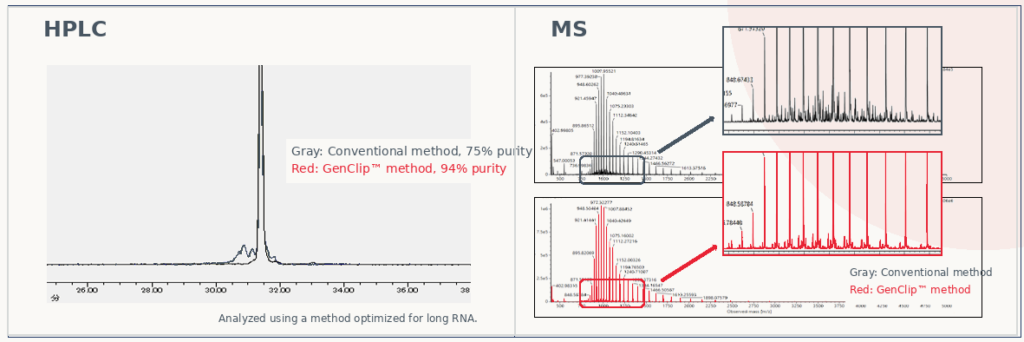
Successfully synthesized 100-mer sgRNA at a 100 mg scale with exceptional purity!
HPLC analysis using a method optimized for long nucleic acids revealed a remarkable difference in purity: 75% for the conventional method versus 94% for the GenClip™ method.
MS analysis further demonstrated the exceptional purity of the GenClip™-derived sgRNA, with no significant impurities detected apart from trace adduct ions originating from the analytical instrument.
GenClip™ delivers sgRNA with outstanding purity and quality—even at the 100 mg scale.
Case 2: 560 mer NanoLuc® mRNA
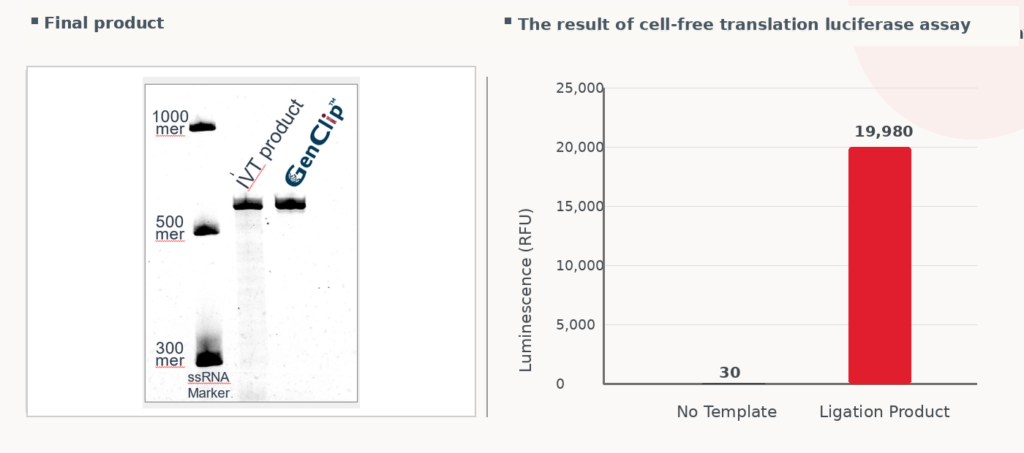
Successfully synthesized a 560-mer mRNA encoding NanoLuc® and demonstrated functional protein expression by luciferase assay.

siRNA
siRNA (small interfering RNA) is a widely used RNA interference (RNAi) tool for short-term silencing of protein-coding genes. Designed to target specific mRNAs for degradation, siRNAs enable efficient and targeted gene silencing.
We manufacture high-quality, custom siRNA oligos to meet our customers’ research needs.
Product Details
- Efficient gene silencing
— Enables sequence-specific suppression of target gene expression through the RNA interference (RNAi) pathway - High target specificity
— Enables selective recognition and silencing of complementary target mRNA - Enhanced nuclease resistance
— Improves siRNA stability against enzymatic degradation through strategic chemical modifications - Efficient RISC loading
— Supports incorporation of the guide strand into Argonaute 2 (Ago2) for effective target mRNA silencing - Reduced off-target effects
— Supports optimized strand selection and chemical modification to minimize unintended gene silencing - Flexible chemical modification
— Supports various modifications, including 2′-OMe, 2′-F, phosphorothioate (PS), and 5′-(E)-vinylphosphonate (VP)
Overview
We manufacture high-quality siRNA according to customers’ requirements under controlled manufacturing conditions, with appropriate measures to prevent RNase contamination throughout the production process. From order to delivery, we provide a quality-controlled workflow to ensure consistent and reliable siRNA products.
Our siRNA services support a wide range of sequences, chemical modifications, overhang designs, and delivery formats to meet different research and development needs.
Our siRNA Capabilities
Grade & Quality Specifications
We offer multiple quality grades to meet different research requirements, from routine experiments to in vivo studies.
| Grade | Purity | Identification (MS) | Na Form | Endotoxin |
| RP-Cartridge | — | Theoretical MW ± 2 Da | — | — |
| HPLC | ≥ 90% | Theoretical MW ± 2 Da | — | — |
| HPLC Plus | ≥ 90% | Theoretical MW ± 2 Da | Yes | — |
| In Vivo EXP | ≥ 90% | Theoretical MW ± 2 Da | Yes | ≤ 0.5 EU/mg |
Chemical Modification
We support a wide range of chemical modifications to optimize siRNA stability, activity, and other properties.
- 2′-O-Methyl (2′-OMe)
- 2′-Fluoro (2′-F)
- LNA
- Phosphorothioate (PS)
- 5′-(E)-Vinylphosphonate (VP)
- Terminal modifications
- Various combinations of chemical modifications
Pricing

LNA Oligonucleotides
We have extensive experience and have established a technology to synthesize high quality and purity LNA oligonucleotides from research to commercial scale (µg to 10 kg) synthesis needs.
Product Details
- High hybridization affinity
— Enables strong binding to complementary RNA or DNA - Enhanced mismatch discrimination
— Improves the ability to distinguish perfectly matched sequences from mismatches - Improved nuclease resistance
— Enhances oligonucleotide stability against enzymatic degradation - Shorter oligonucleotide design
— Enables shorter sequences while maintaining strong target binding - High target specificity
— Supports highly specific targeting of RNA or DNA sequences - Versatile applications
— Suitable for antisense, miRNA, RNA detection, and other nucleic acid research applications
Overview
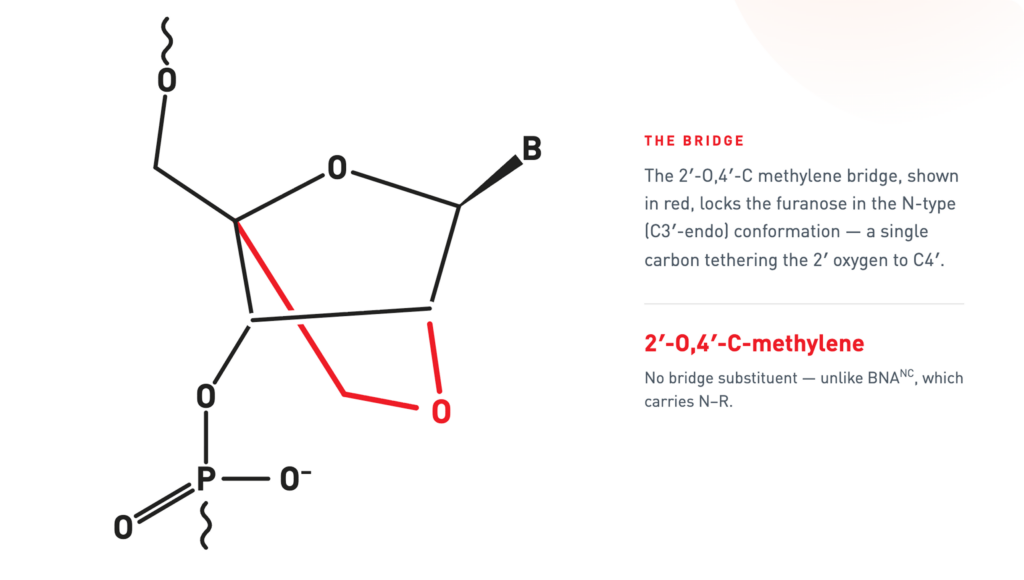
Locked Nucleic Acid (LNA) is a class of modified oligonucleotides in which the ribose sugar is conformationally constrained by a molecular bridge between the 2′-O and 4′-C positions. This locked structure enhances hybridization affinity and thermal stability when LNA oligonucleotides bind to complementary DNA or RNA strands, while improving mismatch discrimination.
These properties make LNA oligonucleotides particularly useful for applications requiring high target specificity, including the detection and targeting of short or highly similar nucleic acid sequences.
With extensive experience in LNA oligonucleotide synthesis, we have established robust technologies for the synthesis and purification of LNA oligonucleotides with a wide range of modification and sequence combinations.
Benefits
- Enhanced thermal stability — Provides strong and stable hybridization with complementary DNA or RNA
- High sequence specificity — Enables precise discrimination of target sequences, including closely related sequences
- Improved nuclease resistance — Enhances oligonucleotide stability against enzymatic degradation
Our LNA Capabilities
- Sequence-specific conjugation
- Terminal modifications
- Phosphorothioate backbone incorporation
- Various combinations of LNA and other chemical modifications
LNA Properties
High Binding Affinity
LNA nucleotides adopt a conformationally constrained sugar structure that favors the geometry required for hybridization. This preorganization reduces the conformational flexibility of the nucleotide and contributes to high binding affinity for complementary RNA and DNA.
The incorporation of LNA nucleotides can increase the melting temperature (Tm) of an oligonucleotide duplex. Higher Tm generally indicates greater thermal stability of the hybrid formed with the complementary strand.
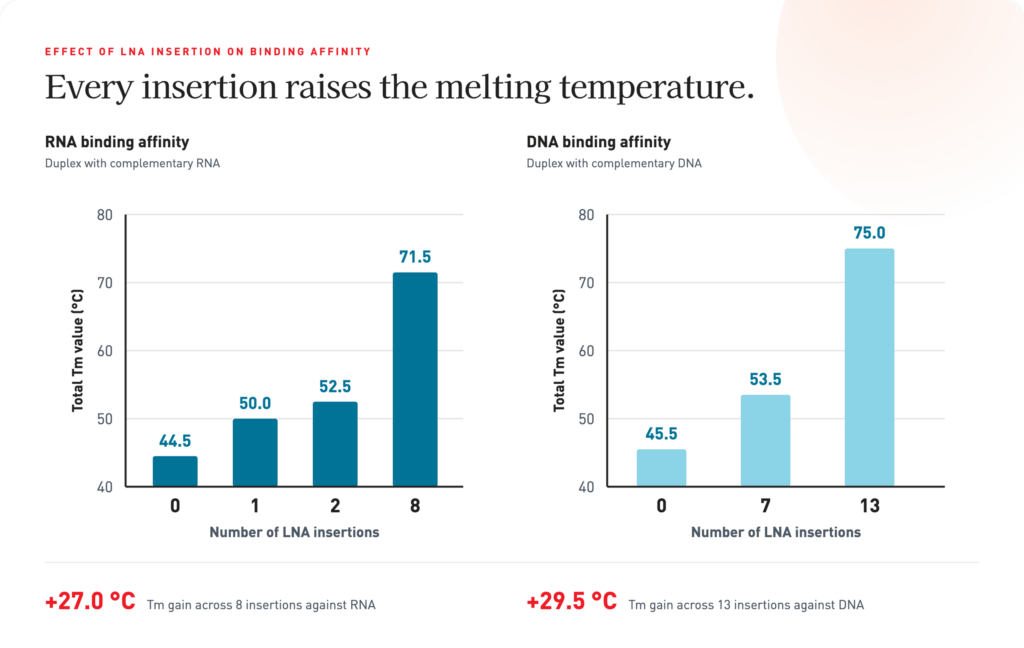
Tm: A commonly used measure of the thermal stability of a nucleic acid duplex. Incorporation of LNA can increase Tm and strengthen hybridization with complementary RNA or DNA.
High Nuclease Resistance
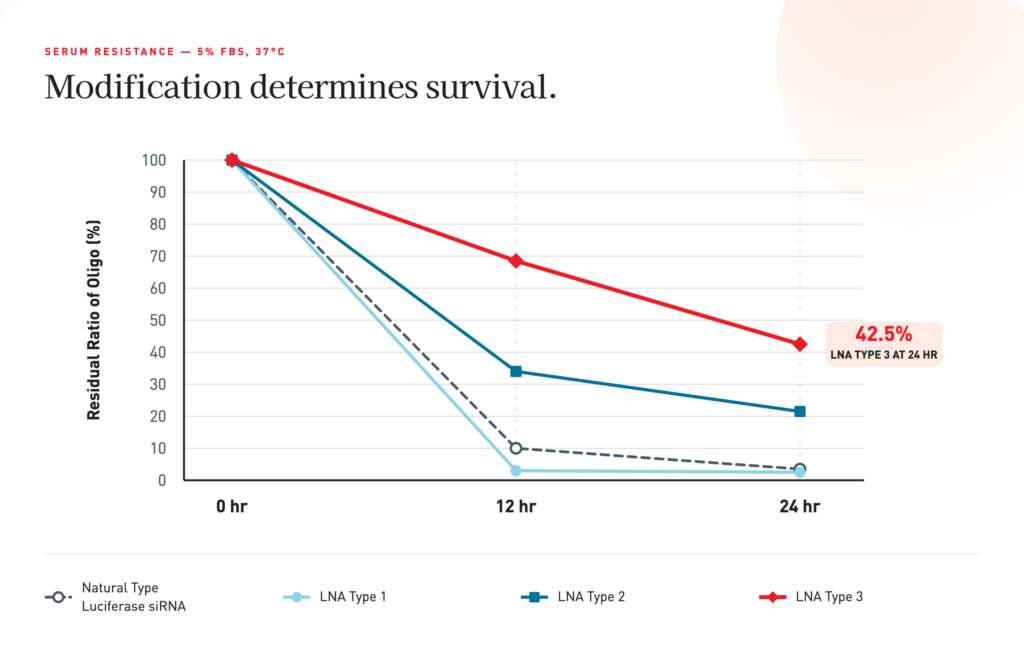
Incorporation of LNA nucleotides can improve the resistance of oligonucleotides to enzymatic degradation compared with unmodified oligonucleotides. This increased nuclease resistance can contribute to improved oligonucleotide stability in biological environments.
The figure below shows an experimental comparison of nuclease resistance among LNA-containing oligonucleotides, phosphorothioate (PS) oligonucleotides, and unmodified oligonucleotides.
Toxicity Study Example
Preclinical studies have investigated the biological responses to different oligonucleotide chemistries, including DNA, phosphorothioate (PS) oligonucleotides, and LNA-containing oligonucleotides.
In a study by Wahlestedt et al., the effects of oligonucleotide administration in the rat brain were evaluated. The study reported inflammatory and histopathological responses following administration of phosphorothioate oligonucleotides, whereas comparable pathological findings were not observed in animals treated with the LNA-containing oligonucleotide evaluated in the study.
These findings suggest that the biological response to an oligonucleotide can vary depending on its chemical composition. However, the safety and tolerability of LNA oligonucleotides depend on factors such as sequence, chemical modifications, dose, route of administration, and study design.
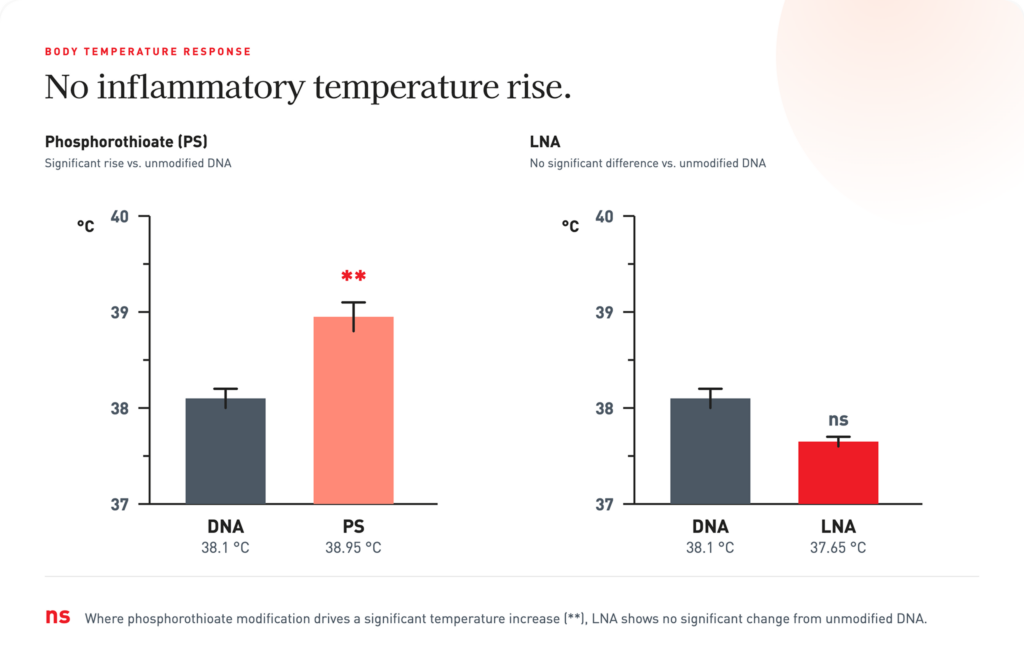
PS: Significant increase in body temperature compared with native DNA.
LNA: No significant increase in body temperature compared with native DNA.
Reference: Wahlestedt et al. (2000), PNAS 97, 5633–5638
Pricing
For products shipped outside of Japan, pricing and delivery times will vary.
BNA™ Oligonucleotides
We have extensive experience and have established a technology to synthesize high quality and purity BNA™ oligonucleotides from research to commercial scale (µg to 10 kg) synthesis needs.
Product Details
- Antisense therapeutics
- Structural reinforcement for siRNA & aptamers
- Functional inhibition of miRNA
- in situ hybridization probe for miRNA
Overview
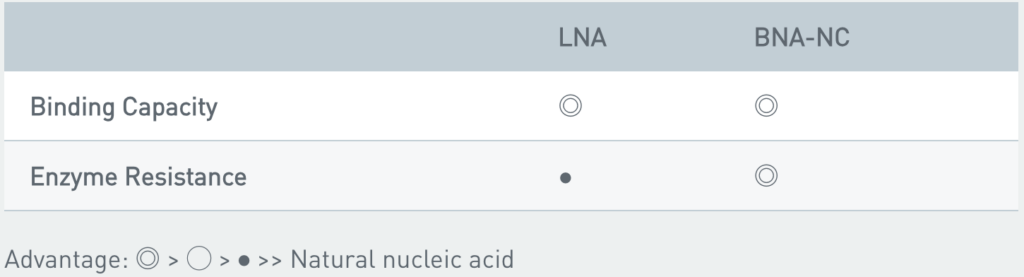
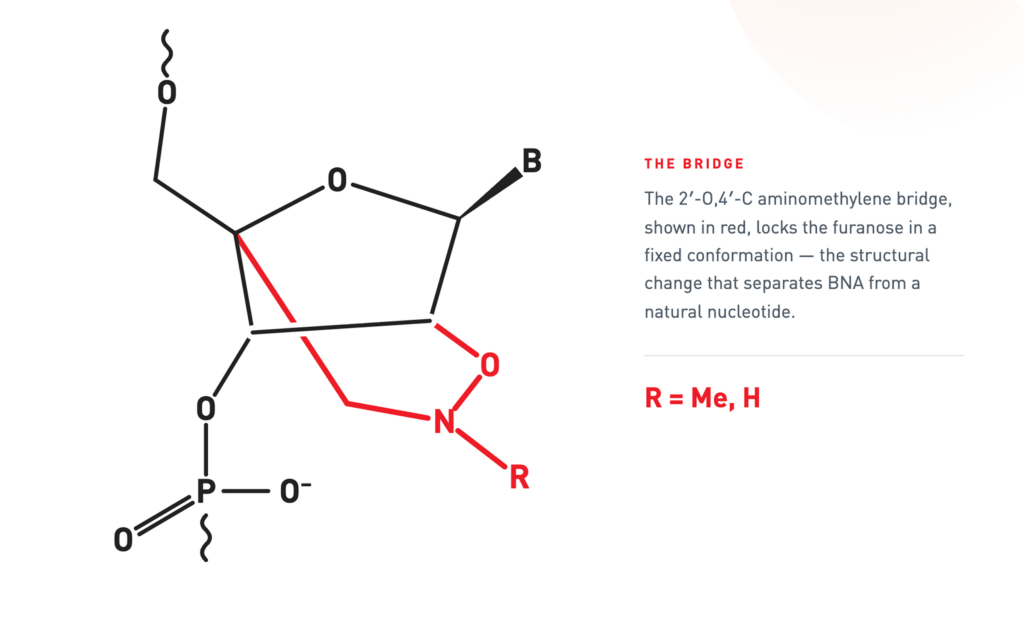
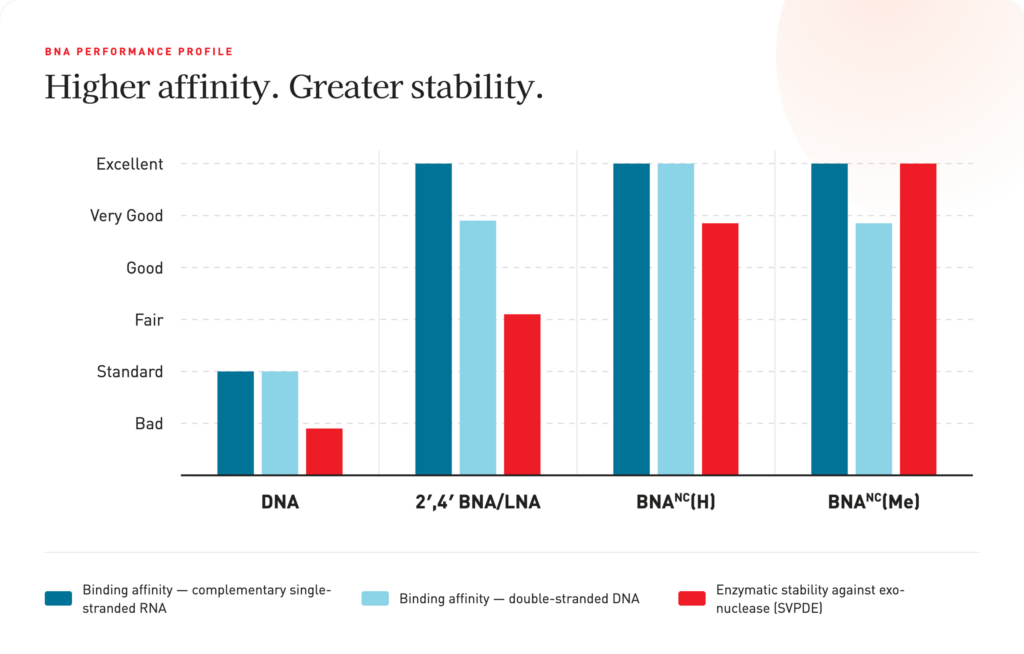
Bridged Nucleic Acid (BNA™) is a generic term for artificial nucleic acids that have a crosslinking structure in the nucleic acid molecule, which is known to provide high stability and high specificity to complementary strands. The cross-linking constrains the degree of freedom of the natural nucleic acid, which enhances binding affinity and enzymatic stability.
Benefits
- High binding affinity to RNA and DNA
- Improved resistance to enzymatic degradation
- Low in vivo toxicity
- Various modifications
Purification by grade
Depending on the purpose of use and need, you can choose from two purification grades: OPC and HPLC purification.
BNA Properties
Pricing
The price is determined by synthesis scale (0, 2 μmol, 1 μmol and mg), base length, and purification method. For products shipped outside of Japan, pricing and delivery times will vary.